

The global housing market shows significant contrasts. Some countries are seeing renewed growth after slow periods, while others face weak demand, tighter lending standards, and ongoing economic uncertainty. Cities experiencing population growth and substantial investment are booming, whereas markets affected by high interest rates are lagging. As a result, property price growth is highly uneven.
This ranking uses the latest verified quarterly and annual data from Global Property Guide (GPG) to show where residential property prices are rising. By comparing nominal and inflation-adjusted price changes, the analysis identifies which markets are genuinely strengthening after inflation is accounted for.
These figures highlight a world in which real estate fortunes are diverging sharply, reflecting both local housing dynamics and broader economic forces shaping the global recovery.
Top 10 By Quarterly Growth (Real and Nominal)
| Country | Inflation Adjusted (Q-o-Q) | Nominal (Q-o-Q) |
| Vietnam | 21.84% | 22.81% |
| Pakistan | 7.99% | 7.75% |
| Portugal | 5.97% | 5.96% |
| Japan | 4.91% | 5.48% |
| Egypt | 4.78% | 8.03% |
| Philippines | 4.66% | 4.24% |
| Hungary | 4.37% | 7.04% |
| Moldova | 3.81% | 5.20% |
| Netherlands | 3.60% | 4.86% |
| Costa Rica | 3.44% | 2.28% |
Vietnam
In the capital city of Hanoi, apartment prices surged by 29.6 % year-on-year in Q1 2025 to about US$2,865/m².
By contrast, in Ho Chi Minh City, apartment prices rose just 1.5% year-on-year in Q1 2025 (to around US$3,316/m²), reflecting a more muted market despite the overall rebound.
Pakistan
As of January 2025, house prices in Karachi rose by approximately 10.5% year-on-year (about 7.95% when adjusted for inflation) according to the residential property price index.
In contrast, the country's rental market felt a more moderate increase of 3.82%.
Portugal
In Q1 2025, Portugal's residential market increased by 16.92%, marking the seventh consecutive month of double-digit annual growth since October 2024.
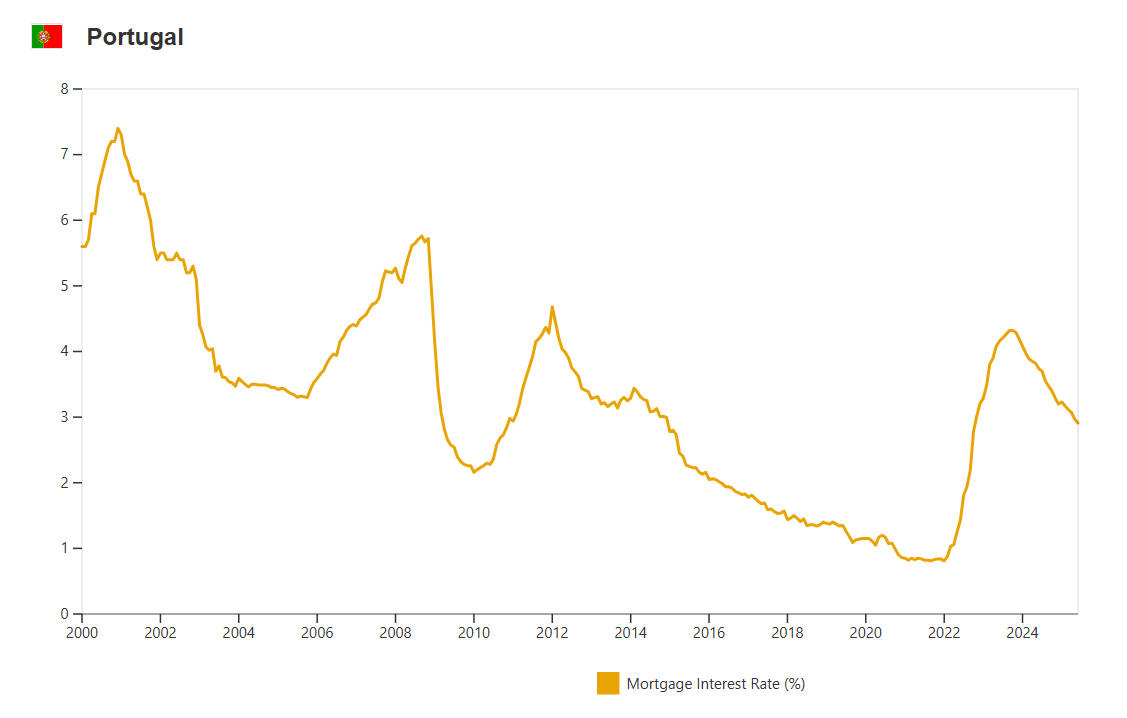
Sales also surged due to falling interest rates on loans. New loans for house purchases showed a slower but positive dynamic in 2024, with pure new loans growing by 34.4% year-on-year.
Japan
In Q1 2025, 20-40% of new apartments are typically sold to foreign buyers in areas such as Chiyoda, Shibuya, and Minato wards.
Condo prices are the key driver of overall growth, with a 10.47% annual increase in Tokyo as of Q2 2025.
Egypt
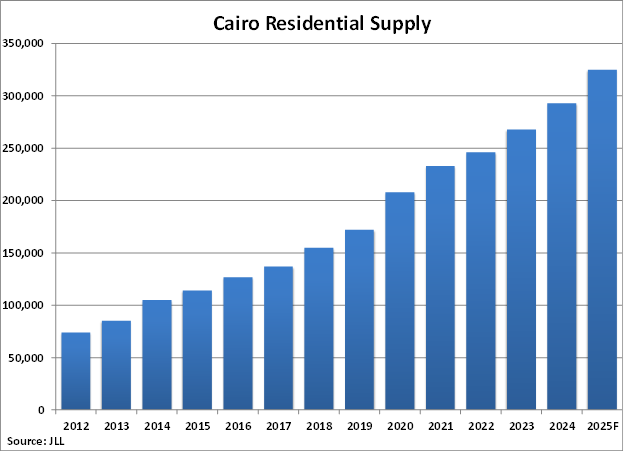
In the three months to April 2025, nationwide residential property prices increased by approximately 7.5% quarter-on-quarter, and about 3% inflation-adjusted.
Demand for housing in Egypt is surging due to its high population growth, rising marriage rates, and foreign buyers.
Philippines
The Philippines saw a 6.7% increase in residential real estate prices in 2024, driven mainly by strong growth in single-detached and attached houses and duplexes.
Conversely, luxury condominium prices in Metro Manila's CBDs declined slightly in early 2025, indicating cooling demand amid oversupply.
Hungary
Early 2025 saw continued robust price growth, including a 15% nationwide rise, with the highest average price per square meter for second-hand dwellings in Budapest, driven by strong demand amid limited supply and high housing market activity.
Moldova
The growth stems from a significant reduction in housing supply, increased internal migration to Chisinau, and a 50% rise in construction costs over three years, despite a notable decline in apartment sales, indicating some market cooling.
Netherlands
In 2024, the year-on-year house price index for existing homes rose by 8.77% nominally (and about 5.24% in real terms after inflation).
As of Q1 2025, prices accelerated further, with the index up 10.23% year-on-year (or about 5.89% real-terms growth).
Costa Rica
Nationwide property values rose by 7.8% and are expected to continue through 2025.
Guanacaste and the Central Valley have the strongest performances.
Top 10 By Annual Growth (Real and Nominal)
| Country | Inflation Adjusted (1 Year) | Nominal (1 Year) |
| Pakistan | 24.12% | 29.22% |
| Moldova | 24.05% | 34.16% |
| Mauritius | 21.59% | 23.82% |
| North Macedonia | 21.14% | 25.10% |
| Portugal | 18.55% | 21.63% |
| Vietnam | 16.71% | 20.14% |
| Montenegro | 15.96% | 20.87% |
| Costa Rica | 12.98% | 11.86% |
| Japan | 10.45% | 13.48% |
| United Arab Emirates | 10.09% | 13.27% |
Key Observations
1. Asia-Pacific: A Mix of Super-Heaters and Steady Growth
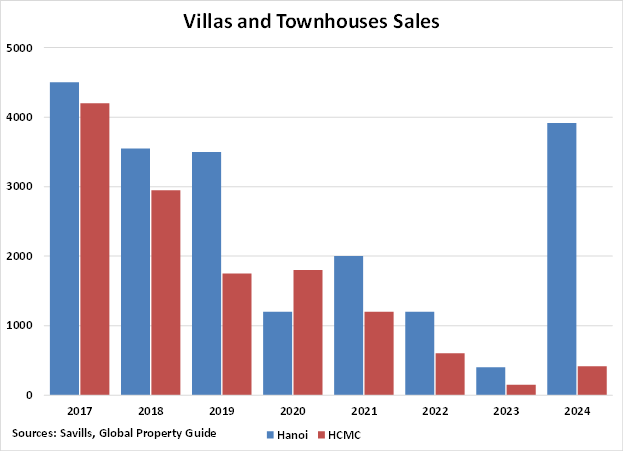
Vietnam leads in short-term growth with a 21.84% real quarterly increase. This growth is concentrated in Hanoi, where prices rose nearly 30% in a year, while Ho Chi Minh City remained stable. The momentum has not yet spread nationwide.
Japan is experiencing a solid, stable recovery. With real quarterly growth of 4.91% and strong annual growth (10.45% real), its market is driven by condo price increases in Tokyo and significant foreign buyer interest.
The Philippines displays a divided market. Overall residential growth contrasts with a slowdown in Manila's luxury condo market, where oversupply is cooling prices. This highlights the independent performance of market segments.
2. Europe: Eastern Surges and Western Stability
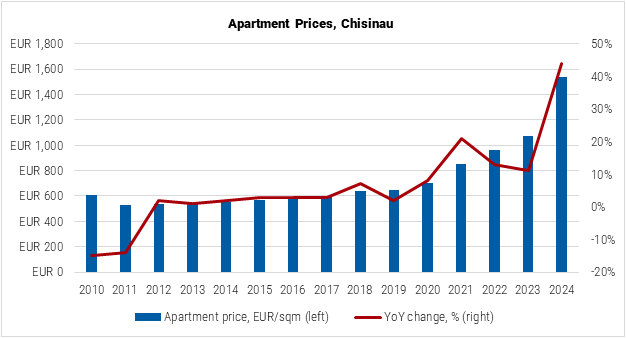
Eastern Europe and the Balkans lead in annual growth. Moldova (24.05% real), North Macedonia (21.14% real), and Montenegro (15.96% real) are among the top global performers, driven by catch-up dynamics, supply shortages, and migration to capital cities.
Portugal stands out in Southern Europe for robust, consistent growth. Its high rankings in both quarterly and annual tables, with nearly identical nominal and real growth, indicate a mature, inflation-resistant market supported by foreign investment and economic stability.
Hungary and the Netherlands also report strong, demand-driven growth, especially in major cities like Budapest and Amsterdam.
3. Other Notable Performers
Pakistan leads in annual real growth at 24.12%, though this is closely linked to inflation.
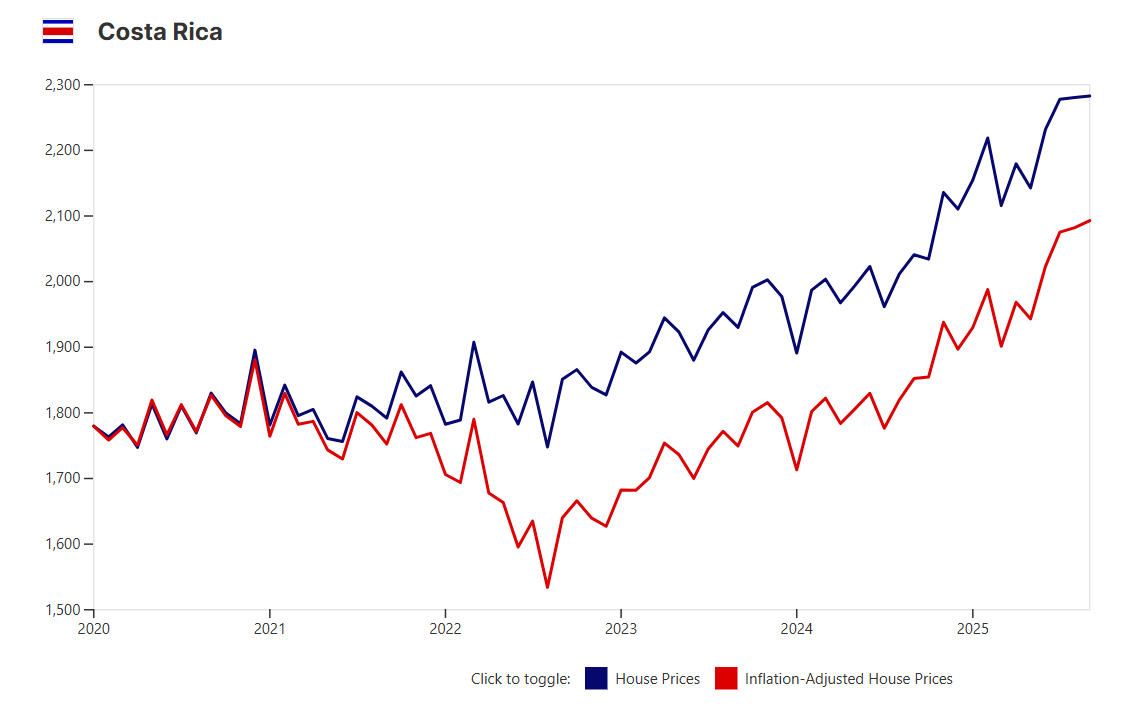
Costa Rica presents a unique case in which real growth exceeds nominal growth-a rare phenomenon that typically occurs in environments with very low inflation or deflation, thereby boosting purchasing power.
Nominal vs. Real Growth
A key takeaway is that headline price figures can be misleading. The gap between nominal and real growth, which accounts for inflation, reveals the true state of the market and the actual gains in purchasing power.
Nominal Gains Don't Tell The Whole Story
In high-inflation countries, real price increases are significantly eroded, resulting in a wide gap between nominal and real growth figures:
- Moldova: Nominal prices are up 34.16% in a year, but after inflation, the real gain is only 24.05%.
- Pakistan: A 29.22% nominal annual increase shrinks to a 24.12% real increase.
- Egypt: In the short term, an 8.03% quarterly price rise is more than halved to just 4.78% in real terms.
In these markets, much of the apparent gain merely keeps pace with rising living costs, resulting in limited real wealth creation.
When Gains Are Genuine
In contrast, low-inflation markets retain most of their nominal gains, signaling true market strength and genuine appreciation.
- Portugal has nearly identical nominal (5.96% quarterly) and real (5.97% quarterly) growth.
- Japan also demonstrates strong real appreciation, with most of its 5.48% nominal quarterly growth reflected in a 4.91% real increase.
Implications for Property Owners and Real Estate Stakeholders
For Investors: Look beyond headline figures. High nominal growth in markets such as Moldova or Pakistan may be offset by currency devaluation and inflation. More stable, inflation-resistant markets like Portugal and Japan may offer lower but more secure real returns.
For Developers: Hyper-local trends are essential. Success depends on targeting specific cities, such as Hanoi rather than Ho Chi Minh City, and on understanding local factors, such as Hanoi's tech boom, supply constraints, and rising construction costs in Eastern Europe.
For Policymakers: A one-size-fits-all approach is ineffective. Booming markets such as Portugal and Hungary require measures to prevent overheating and address affordability, while cooling markets, such as Manila's luxury segment, need strategies to manage oversupply and developer insolvency risks.
